News

September 9th, 2026

Free will writing service: Make your will for free with CTRT

Are you thinking of making a will but don’t know where to start? We understand that it may feel like a huge task, that’s why CTRT have partnered with Farewill to provide an easy to use, free, online will writing service. Here’s what you need to know to get started.

First, let’s explain why writing a will is important.

Writing a will is one of the most important things you can do for the people and causes you love. A will allows you to have control over what happens to your property, money and belongings after you die.

If you’re a parent, it is important to have a will in place if you have children under 18, as this allows you to state who you will want as their legal guardian if anything happens to you.

If you’re a homeowner, writing a will allows you to set out how you want to divide your estate including any property or financial accounts you own. You can make an inventory of your assets and choose exactly how much you would like people to inherit, helping to prevent family disputes.

If you’re in a partnership, after the death of a loved one, the amount of arrangements to be made can be overwhelming, writing a will can help alleviate that problem.

A chance to leave a lasting legacy with charitable giving, it’s not just people who can benefit from your will, but organisations such as CTRT can do too.

What happens if you die without a will?

If you die before making a will, any assets that can be found will be divided up following the rules of intestacy. These are a set of traditional rules that can define who has what, but it may not follow exactly what you want.

When you make a will with Farewill you can make an inventory of assets, so your loved ones know exactly where to find everything.

What do I need to get started with my will?

Most people don’t really know what to put in a will until they get started. Some think they’ll have to search through bank statements and pension information, while others worry about being inundated with complex jargon and expensive legal fees.

Farewill’s online will writing service takes that all away and makes writing a will simple and stress-free. By breaking everything down into a few manageable steps, you can write a will online in as little as 15 minutes.

The usual cost of an online will with Farewill is around £100. By using our free service, you can save while still receiving a professionally checked will.

Here are the key steps involved so you know exactly what to expect when you start writing a will:

  1. Enter your name, email and password to create your account
  2. About You – a little bit of information about you and your family
  3. Guardians – If you have pets or children under 18 in the first section of your will, you’ll then be asked to appoint guardians for them
  4. Accounts and Property – in this section you will be able to make a simple inventory of your assets. This then ensures that everything is easy to find when you’re gone.
  5. Your estate – this is where you can decide the estate split between beneficiaries, i.e. who/what organisations are inheriting
  6. Executors – these are the people you choose to be responsible for carrying out the terms of the will
  7. Gifts – this is where you can choose to leave specific gifts to friends, family or charities.
  8. Funeral wishes – you can include funeral arrangements in your will but this section is optional and not legally binding

Choosing executors of your will

Executors are the people responsible for making sure your wishes are followed after you die, so you should choose people who you can trust and are comfortable with paperwork and admin. You can appoint a family member, friend or professional or a combination of all three whilst using Farewill’s online will writing service.

Find out more about appointing executors of your will.

What happens after I complete my will online?

Once you’ve finished writing your will, Farewill’s experts check and approve it within five working days. Then you can print and sign it from the comfort of your own home to make it legally binding. This means you can go from creating your account to having a legal will in your hand within five working days.

Can I update my will?

You may have written your will already but that doesn’t always mean your needs and wishes are going to stay the same. We recommend checking and updating your will every 2-3 years to make sure all the changes in your lifestyle circumstances such as, buying a new property, having a baby or getting married, and assets are accounted for. This can be updated in your farewill account at any time.
Why choose to leave CTRT a gift in your will?

Through a gift in your will, you can help to provide a lasting legacy for a future without cancer, helping our team to advance life-saving cancer research for years to come.Whilst there is no obligation to include a gift in your will, we hope you will consider leaving a gift to CTRT once your loved ones are provided for.


Find out more about writing your will with Farewill here:

August 14th, 2026 By ctrt_admin

Hide, Seek, Treat: Outsmarting Gestational Trophoblastic Neoplasia with Immunotherapy

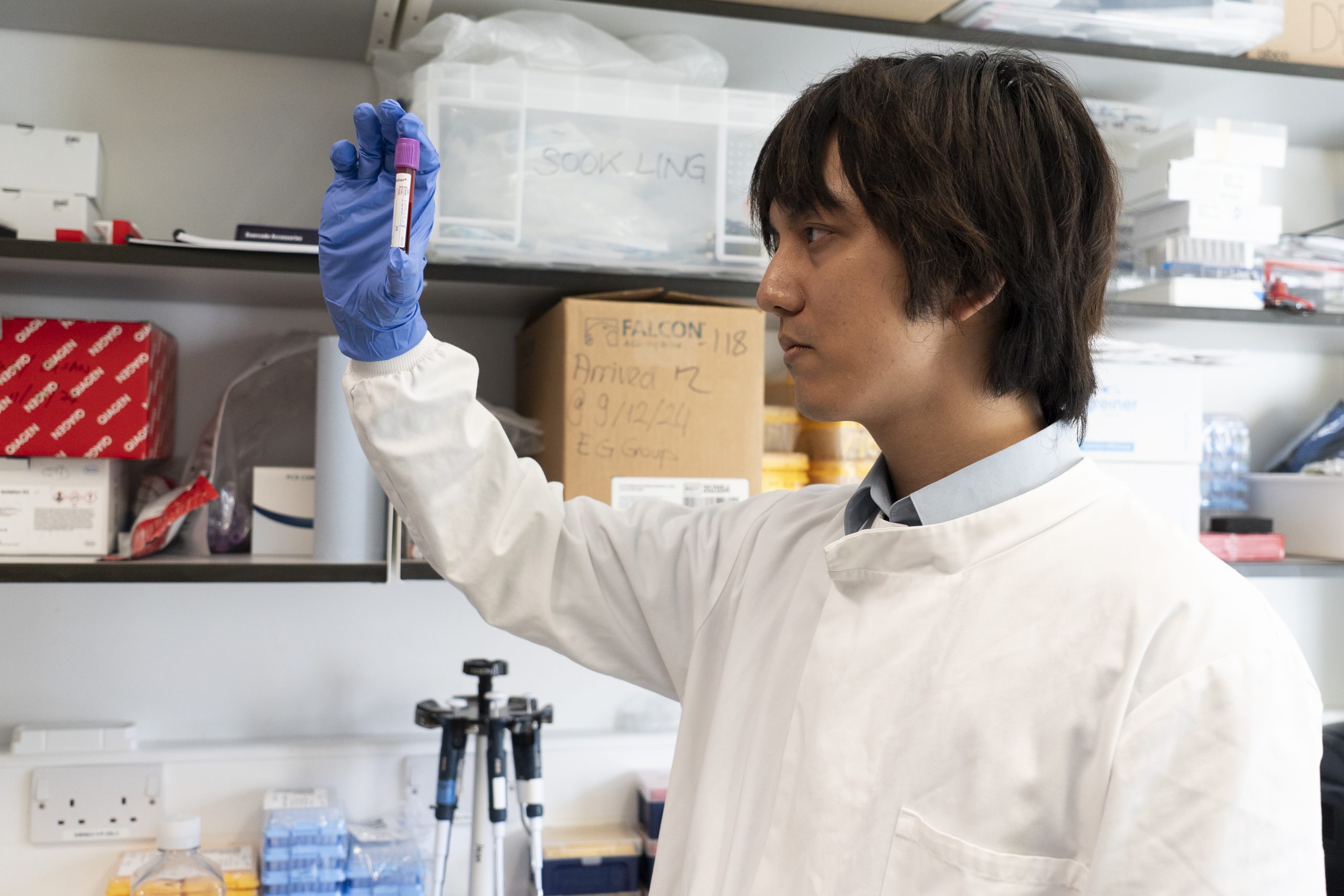
Gestational trophoblastic neoplasia (GTN) (a form of Gestational Trophoblastic Disease) is a type of malignant (cancerous) tumour that develops during or after pregnancy from cells that would normally form the placenta – the organ that feeds the growing baby. GTN is rare and also highly unusual. Whilst all other cancers grow from the body’s own cells, GTN comes from cells that belong to the placenta which genetically is part of the fetus. Usually, cells in the body that aren’t ‘self’ are recognised as foreign & destroyed by the immune system. However, special mechanisms come in to play during pregnancy, which limits immune reactions to prevent the mother’s immune system destroying the baby and placenta. As is typical of cancers, however, GTN can hijack these mechanisms to avoid being targeted by the immune system, enabling it to grow and spread to other parts of the mother’s body. On the flip side, GTN responds much better than other cancers to a certain type of immunotherapy, with a cure rate of around 75%. Immunotherapy works by stimulating the body's own immune system to target and kill cancer cells, which begs the obvious question: how does this treatment expose the tumour to attack by the immune system? This is precisely the topic that Yiming Guan, a PhD student funded by the Cancer Treatment & Research Trust, is researching. Together with his coworkers, and under the supervision of Dr Ehsan Ghorani, Yiming aims to investigate the immune cell ‘landscape’ of GTN, in essence creating a directory of the types and locations of immune cells around the tumour before and after immunotherapy. The current thinking is that, in the absence of immunotherapy, GTN tumour cells send instructions to a certain type of immune cell (a CD4 T cell), telling it to adopt a more tolerant role and to talk its comrades out of mounting an immune attack; immunotherapy, however, intercepts these messages so that CD4 cells enlist in and coordinate an immune cell army to destroy the tumour cells. Precisely what determines whether these T cells behave as peacekeepers or soldiers, though, isn’t fully understood. In the 3-year PhD project funded by CTRT, Yiming and his fellow lab mates will use state-of-the-art ‘multi-omics’ techniques to generate huge amounts of information about the biological molecules that are present in GTN tumours, and immune cells from tissue samples taken from untreated patients and from patients given the immunotherapy drug Pembrolizumab. Changes in the amounts of particular molecules and/or their whereabouts within individual tumour and immune cells could give us more insight into the mechanisms that militarize T cells against the tumours. Since GTN responds so well to immunotherapy, these studies could uncover important principles that might help to improve this treatment for other, more common cancers that do not usually respond well to treatment.
Read More read more
November 19th, 2025 By ctrt_admin

New Guidelines for Gestational Trophoblastic Disease

Gestational trophoblastic disease (GTD) comprises a rare group of pregnancy-related tumours, ranging from premalignant forms, including partial and complete hydatidiform moles (molar pregnancies), to malignant types (referred to as gestational trophoblastic neoplasia (GTN)), which include invasive mole, choriocarcinoma, placental site trophoblastic tumours and epithelioid trophoblastic tumours. Although uncommon, GTD affects around 220,000 women globally each year, with 22,000 developing GTN. In a recent podcast, the Editor-in-Chief of the International Journal of Gynecological Cancer, Dr Pedro Ramirez, sat down with CTRT’s Chair of Trustee’s Professor Michael Seckl and Dr Christianne Lok, two leading international experts in gynaecologic oncology, to discuss Practical Guidelines for the Treatment of GTD: Collaboration of the European Organization for the Treatment of Trophoblastic Disease (EOTTD)-European Society of Gynecologic Oncology (ESGO)-Gynecologic Cancer Intergroup (GCIG)-International Society for the Study of Trophoblastic Diseases (ISSTD), recently published in the Journal of Clinical Oncology. Developed by 53 specialists across 31 countries, these guidelines represent the most comprehensive global consensus to date. One key topic of discussion in the podcast was the importance of specialized GTD centres. The new guidelines define clear criteria for such centres, with the hope of improving access to expert care worldwide. Even though these tumours are uncommon, centralization of care, the experts explained, improves outcome, as shown in studies of other cancers and rare diseases. The experts also emphasized that careful history-taking should always be part of the diagnostic process, regardless of any latest developments. Abnormal bleeding, severe nausea or abdominal pain can point to GTD, but confirmation relies on ultrasonography, measurement of human chorionic gonadotropin (hCG; a pregnancy hormone often raised in GTD), and most importantly, tissue analysis; genetic testing can also help. The guidelines also include flowcharts to guide doctors through diagnostic dilemmas. Another focus of the guidelines is treatment approaches. For low-risk GTN, single-agent chemotherapy with either methotrexate or actinomycin D is highly effective; the choice of drug often depends on local healthcare systems and patient preference. For high- and ultra-high-risk patients, low-dose induction regimens are often advised prior to more intensive combination chemotherapy treatment to avoid dangerous complications. The experts highlighted how immunotherapy has emerged as a transformative treatment option, particularly for patients who previously faced poor outcomes, as well as offering new hope for patients with very rare subtypes such as placental site and epithelioid trophoblastic tumours. Finally, the guidelines emphasize individualized follow-up. The accompanying flowcharts help clinicians tailor surveillance, while recent evidence has suggested that follow-up after partial and complete moles could potentially be shortened once hCG levels normalize — welcome news for women hoping to conceive again. The experts also considered fertility in their discussion of disease recurrence in the podcast. These new guidelines represent a milestone for GTD care, paving the way for better support and outcomes for patients worldwide. Listen to the full podcast with Professor Seckl and Dr Lok here.
Read More read more
The Cancer Treatment and Research Trust
Privacy Overview

This website uses cookies so that we can provide you with the best user experience possible. Cookie information is stored in your browser and performs functions such as recognising you when you return to our website and helping our team to understand which sections of the website you find most interesting and useful.