News

London Marathon 2025 Team CTRT
June 10th, 2025

London Marathon 2025 Team CTRT

Five heroes, one aim: to raise vital funds for the Cancer Treatment and Research Trust

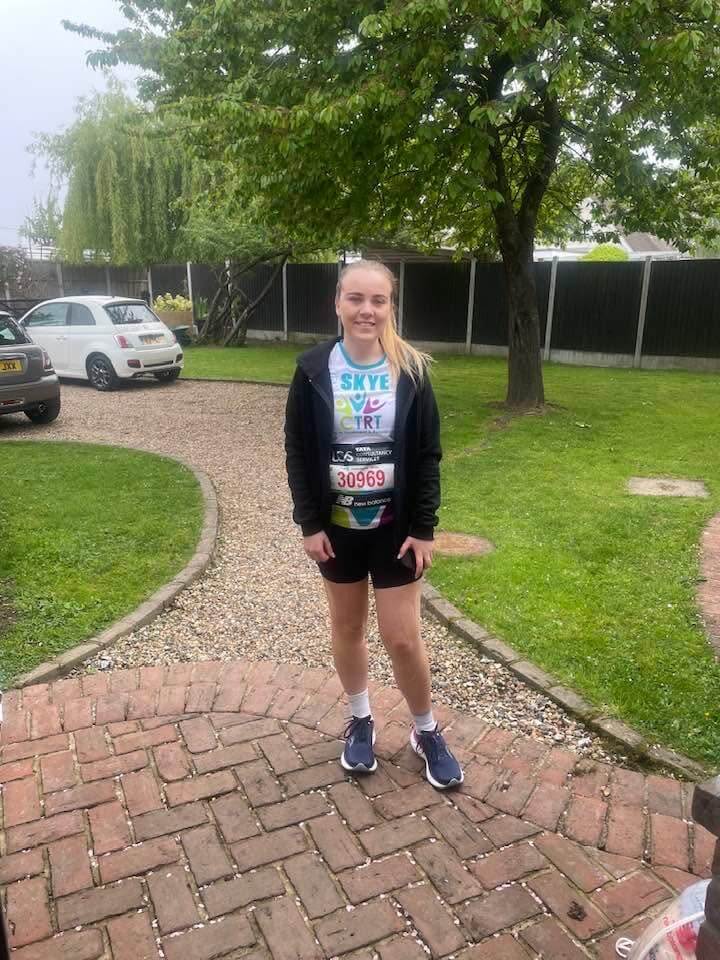
On Sunday April 27th, five amazing individuals laced up their trainers and joined forces with over 56,000 other runners to complete the 45th TCS London Marathon. In doing so, Ricky and Jess White, Nigel Texeira, Skye Wilde and Fabi Bartella raised an astounding £13,010 and counting for the Cancer Treatment and Research Trust, helping us in our mission to improve lives through research by developing kinder and more effective cancer treatments.

Not only was it a historic day — attracting a record-breaking number of participants (56,640), breaking the world record for the biggest annual one-day fundraising event (£75 million and still counting!) and setting 41 new world records (including the fastest marathon dressed as a crustacean!) — but it was also a hot one! Temperatures peaked at 21°C, and runners were advised to “Slow down, smile, enjoy it” — advice that was inevitably easier to follow with the sun shining brightly, the crowds cheering enthusiastically and a route laden with landmarks. Starting in Greenwich Park, the iconic 26.2-mile journey through the heart of the capital takes in the Cutty Sark, Tower Bridge, Canary Wharf, the Tower of London, the London Eye and Big Ben, culminating at The Mall near Buckingham Palace.

Each of our five superstars had their own, personal reason for taking on the challenge: Fabi’s was to remember the life of her grandad, while Skye was inspired by her late nan to raise funds for cancer research; brother and sister duo Ricky and Jess’s fundraising page proudly states ‘Running for a Cure; Help Us Beat Cancer!’, and it had been a long ambition of Nigel’s to run the London Marathon. Their shared goal, however — to support CTRT — will ensure that the impact of their arduous training and successful completion of the event will extend way beyond the finish line. The vital funds raised by our incredible runners will be used to research why and how cancers develop, find better ways of detecting and monitoring cancers, and test new treatments.


If you’re feeling motivated by reading this, why not take a look at our Challenge Events page to find opportunities to push your limits or simply have fun to support our cause? Whether it’s running (like these legends) or bungee jumping, your participation can make a real difference.

Interested in joining Team CTRT in future London Marathon races? You can find more information here (The London Marathon – The Cancer Treatment and Research Trust) on how to take part.

August 14th, 2026 By ctrt_admin

Hide, Seek, Treat: Outsmarting Gestational Trophoblastic Neoplasia with Immunotherapy

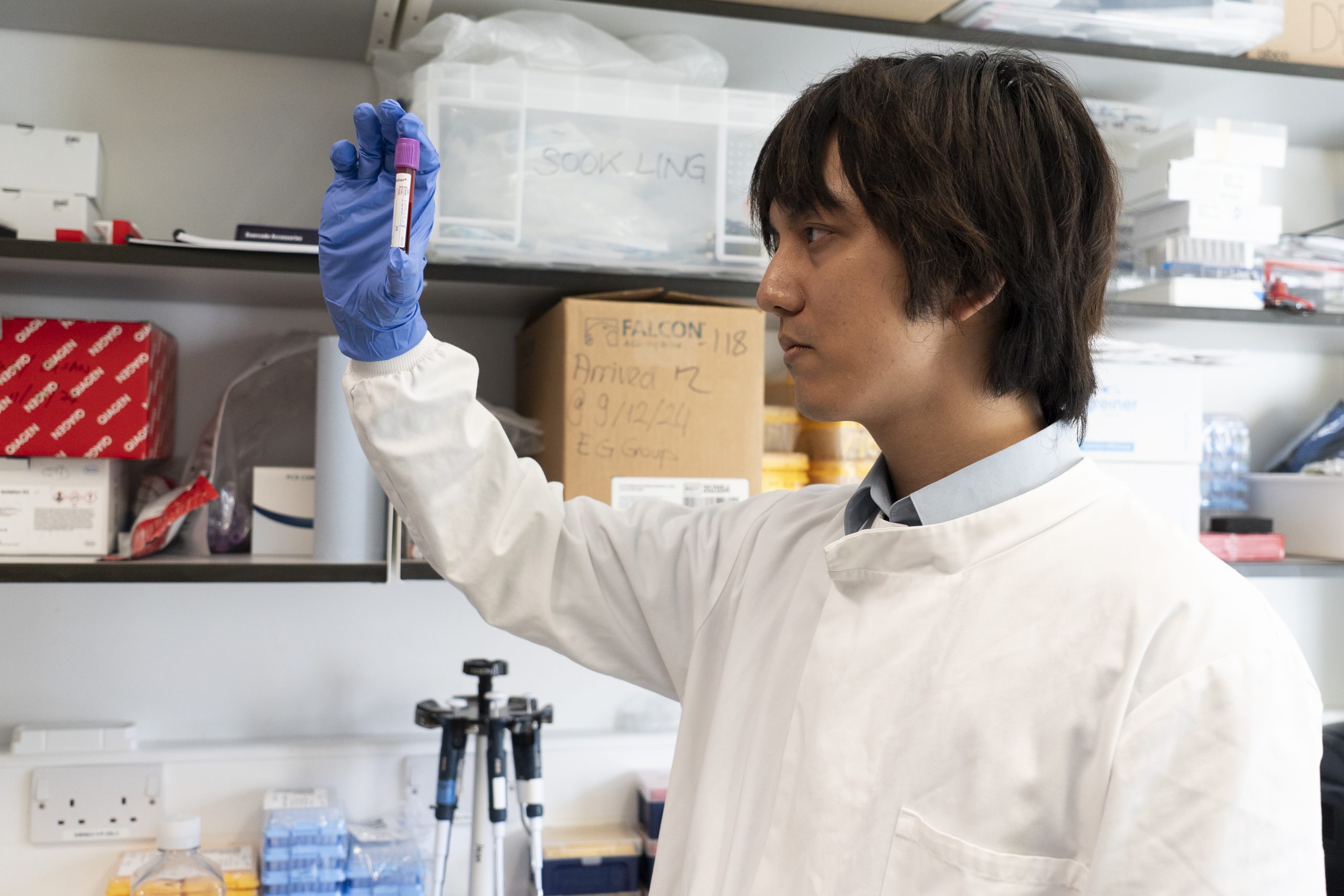
Gestational trophoblastic neoplasia (GTN) (a form of Gestational Trophoblastic Disease) is a type of malignant (cancerous) tumour that develops during or after pregnancy from cells that would normally form the placenta – the organ that feeds the growing baby. GTN is rare and also highly unusual. Whilst all other cancers grow from the body’s own cells, GTN comes from cells that belong to the placenta which genetically is part of the fetus. Usually, cells in the body that aren’t ‘self’ are recognised as foreign & destroyed by the immune system. However, special mechanisms come in to play during pregnancy, which limits immune reactions to prevent the mother’s immune system destroying the baby and placenta. As is typical of cancers, however, GTN can hijack these mechanisms to avoid being targeted by the immune system, enabling it to grow and spread to other parts of the mother’s body. On the flip side, GTN responds much better than other cancers to a certain type of immunotherapy, with a cure rate of around 75%. Immunotherapy works by stimulating the body's own immune system to target and kill cancer cells, which begs the obvious question: how does this treatment expose the tumour to attack by the immune system? This is precisely the topic that Yiming Guan, a PhD student funded by the Cancer Treatment & Research Trust, is researching. Together with his coworkers, and under the supervision of Dr Ehsan Ghorani, Yiming aims to investigate the immune cell ‘landscape’ of GTN, in essence creating a directory of the types and locations of immune cells around the tumour before and after immunotherapy. The current thinking is that, in the absence of immunotherapy, GTN tumour cells send instructions to a certain type of immune cell (a CD4 T cell), telling it to adopt a more tolerant role and to talk its comrades out of mounting an immune attack; immunotherapy, however, intercepts these messages so that CD4 cells enlist in and coordinate an immune cell army to destroy the tumour cells. Precisely what determines whether these T cells behave as peacekeepers or soldiers, though, isn’t fully understood. In the 3-year PhD project funded by CTRT, Yiming and his fellow lab mates will use state-of-the-art ‘multi-omics’ techniques to generate huge amounts of information about the biological molecules that are present in GTN tumours, and immune cells from tissue samples taken from untreated patients and from patients given the immunotherapy drug Pembrolizumab. Changes in the amounts of particular molecules and/or their whereabouts within individual tumour and immune cells could give us more insight into the mechanisms that militarize T cells against the tumours. Since GTN responds so well to immunotherapy, these studies could uncover important principles that might help to improve this treatment for other, more common cancers that do not usually respond well to treatment.
Read More read more
November 19th, 2025 By ctrt_admin

New Guidelines for Gestational Trophoblastic Disease

Gestational trophoblastic disease (GTD) comprises a rare group of pregnancy-related tumours, ranging from premalignant forms, including partial and complete hydatidiform moles (molar pregnancies), to malignant types (referred to as gestational trophoblastic neoplasia (GTN)), which include invasive mole, choriocarcinoma, placental site trophoblastic tumours and epithelioid trophoblastic tumours. Although uncommon, GTD affects around 220,000 women globally each year, with 22,000 developing GTN. In a recent podcast, the Editor-in-Chief of the International Journal of Gynecological Cancer, Dr Pedro Ramirez, sat down with CTRT’s Chair of Trustee’s Professor Michael Seckl and Dr Christianne Lok, two leading international experts in gynaecologic oncology, to discuss Practical Guidelines for the Treatment of GTD: Collaboration of the European Organization for the Treatment of Trophoblastic Disease (EOTTD)-European Society of Gynecologic Oncology (ESGO)-Gynecologic Cancer Intergroup (GCIG)-International Society for the Study of Trophoblastic Diseases (ISSTD), recently published in the Journal of Clinical Oncology. Developed by 53 specialists across 31 countries, these guidelines represent the most comprehensive global consensus to date. One key topic of discussion in the podcast was the importance of specialized GTD centres. The new guidelines define clear criteria for such centres, with the hope of improving access to expert care worldwide. Even though these tumours are uncommon, centralization of care, the experts explained, improves outcome, as shown in studies of other cancers and rare diseases. The experts also emphasized that careful history-taking should always be part of the diagnostic process, regardless of any latest developments. Abnormal bleeding, severe nausea or abdominal pain can point to GTD, but confirmation relies on ultrasonography, measurement of human chorionic gonadotropin (hCG; a pregnancy hormone often raised in GTD), and most importantly, tissue analysis; genetic testing can also help. The guidelines also include flowcharts to guide doctors through diagnostic dilemmas. Another focus of the guidelines is treatment approaches. For low-risk GTN, single-agent chemotherapy with either methotrexate or actinomycin D is highly effective; the choice of drug often depends on local healthcare systems and patient preference. For high- and ultra-high-risk patients, low-dose induction regimens are often advised prior to more intensive combination chemotherapy treatment to avoid dangerous complications. The experts highlighted how immunotherapy has emerged as a transformative treatment option, particularly for patients who previously faced poor outcomes, as well as offering new hope for patients with very rare subtypes such as placental site and epithelioid trophoblastic tumours. Finally, the guidelines emphasize individualized follow-up. The accompanying flowcharts help clinicians tailor surveillance, while recent evidence has suggested that follow-up after partial and complete moles could potentially be shortened once hCG levels normalize — welcome news for women hoping to conceive again. The experts also considered fertility in their discussion of disease recurrence in the podcast. These new guidelines represent a milestone for GTD care, paving the way for better support and outcomes for patients worldwide. Listen to the full podcast with Professor Seckl and Dr Lok here.
Read More read more
The Cancer Treatment and Research Trust
Privacy Overview

This website uses cookies so that we can provide you with the best user experience possible. Cookie information is stored in your browser and performs functions such as recognising you when you return to our website and helping our team to understand which sections of the website you find most interesting and useful.